The AI Second Brain Wave: What Claude Code + Obsidian Actually Gets You
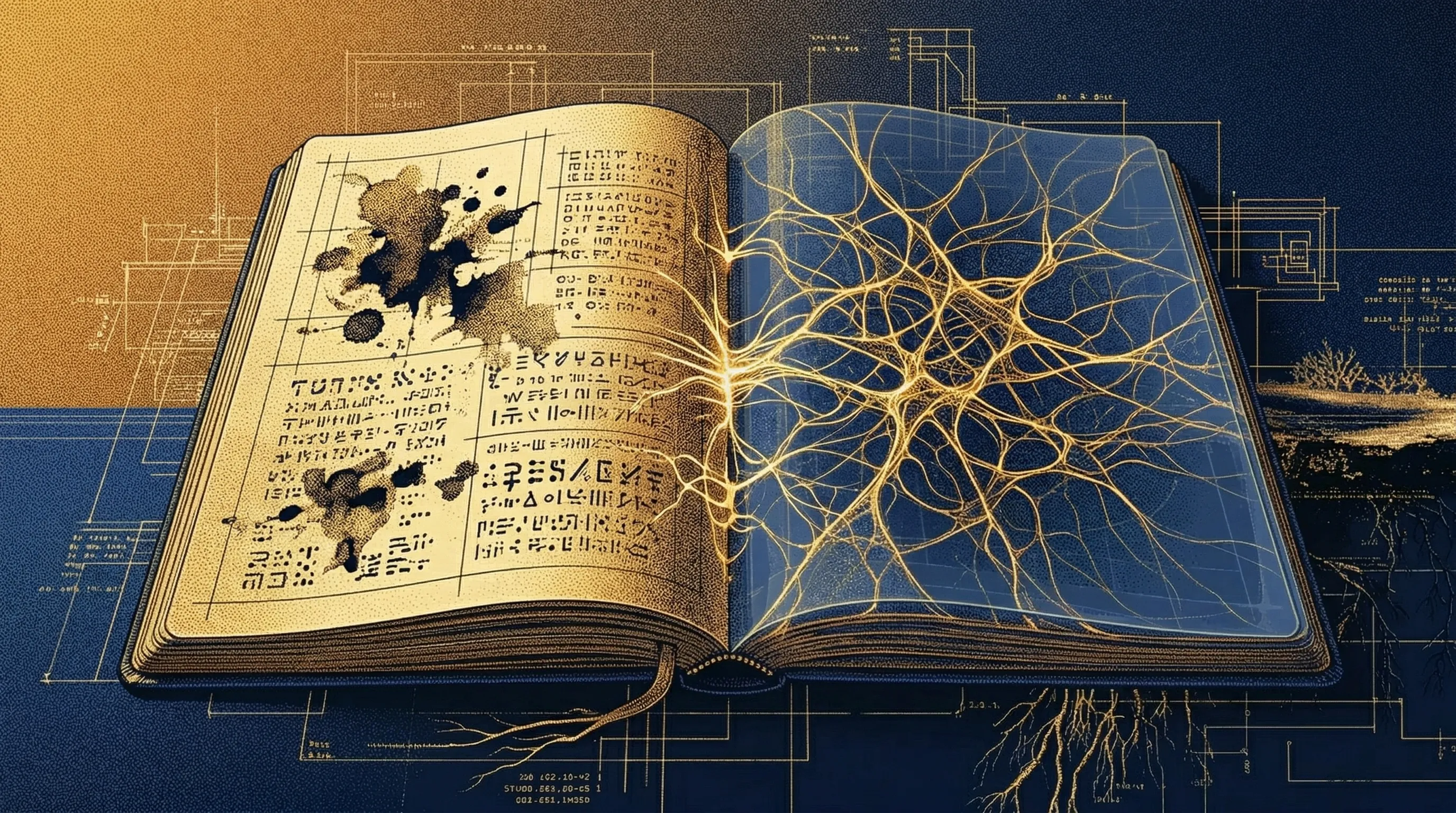
The Claude Code plus Obsidian trend hit X in early April 2026 and pulled 50,000+ likes across a handful of posts in under a week. Andrej Karpathy published his LLM Knowledge Bases gist on April 3. It collected over 14,000 stars and 1,900 forks. Within 48 hours, developers shipped tools like Graphify and Claudeopedia on top of it. The pitch: point an AI agent at your markdown vault and let it maintain a living knowledge graph for you.
I watched this unfold with a strange mix of recognition and frustration. I'd already built two Obsidian plugins that solve chunks of this problem. Tuon Scribe handles live mic transcription and AI summarization inside Obsidian notes. Tuon Deep Research runs async research jobs that drop structured findings directly into your vault. Both shipped months before Karpathy's post went viral.
This is what I learned building them, what the viral tutorials skip, and where this trend actually lands once the hype settles.
The Pattern Everyone Is Copying
Karpathy's LLM Knowledge Bases gist proposed a three-layer architecture. Raw sources go into an immutable folder. The LLM owns a wiki layer where it creates pages, maintains cross-references, and resolves contradictions. A schema file (CLAUDE.md or AGENTS.md) tells the model how the wiki is structured and what conventions to follow.
Three operations keep it running: ingest processes new sources and updates all relevant existing pages. Query searches the wiki and synthesizes answers with citations. Lint runs periodic health checks for contradictions, orphaned pages, and stale claims.
The key distinction from RAG: a retrieval system reconstructs knowledge from scratch on every query. Karpathy's wiki compounds it. The cross-references already exist. The contradictions have already been flagged. The synthesis reflects everything you've fed the system, not just what a similarity search happened to surface.
This landed hard because three preconditions aligned at the same time. Claude Code matured into a real file-editing agent that reads directories, creates files, runs bash commands, and maintains persistent context through CLAUDE.md. Obsidian crossed 1.5 million active monthly users with 22% year-over-year growth, 2,500+ community plugins, and its local-first markdown architecture wide open for AI access. And MCP (Model Context Protocol) reached 100 million monthly downloads with 3,000+ indexed servers, giving agents a standard way to connect to tools.
What I Built Before the Wave
I didn't start with a knowledge graph ambition. I started with a specific problem: I kept switching between my note app Tuon and Obsidian. Tuon had the voice pipeline. Obsidian had my actual notes. Two apps, two sets of context, constant friction.
So I extracted the voice transcription pipeline and shipped it as Tuon Scribe. The plugin captures mic audio, streams it to AssemblyAI for live transcription, then runs the transcript through an LLM for summarization. All of that happens inside the note you're writing. No second app. No local server. One install.
The hard part was the architecture decision. I had a working Python WebSocket gateway. I could have built a thin Obsidian client that talks to it. Instead, I rewrote the audio pipeline in TypeScript and bundled it inside the plugin. That killed a whole class of port collisions, firewall dialogs, and "which Python version" support tickets. The Scribe block uses a code fence for metadata and a hidden div for content, because Obsidian re-renders code blocks on every change and would trigger an infinite loop otherwise.
Deep Research came next. I'd already built a multi-step enrichment pipeline on top of Exa.ai for Tuon. Porting it to Obsidian meant the same pattern: take the research workflow, strip out the app-specific parts, and package it as a plugin that drops structured findings into vault notes. Prompt optimization, source tracking, audit trails. All living in markdown.
Both plugins existed before Karpathy's post. Before Miles Deutscher's 3,100-like thread. Before heyrimsha's 54,000-like proclamation that note-taking is dead. I mention this not to claim credit for a trend but because it shapes how I evaluate it. I've shipped this pattern and I know exactly where it breaks.
What the Tutorials Get Right
The core insight is real. When you give an AI agent file-level access to a markdown vault, passive storage becomes active infrastructure. Notes stop being things you read and start being things the system reads, cross-references, and builds on.
Claude Code makes this practical because it operates on the working directory. Invoke it from your vault root and it has full read/write access to every markdown file. It can create notes, modify existing ones, run bash scripts against your vault, and maintain persistent context through CLAUDE.md and memory.md files. The obsidian-claude-code-mcp plugin connects via WebSocket on port 22360, exposing file operations to any MCP client.
The voice-first pipeline that's gaining traction also checks out. Voice memo on phone, transcription via Whisper, auto-drop into an Obsidian inbox, Claude Code processes and files it. I built this exact pipeline with Tuon Scribe. The difference between my implementation and the viral tutorials is that I also solved vocabulary accuracy. Generic speech-to-text mangles names. Every time I said "Tuon," the API wrote "tune" or "two on." So I built a plain-text vocabulary file that teaches the speech model your jargon. That's a detail the 39-second setup videos leave out.
The Graphify tool that launched off Karpathy's post takes the pattern further. Point it at any folder, run a command, and get a navigable knowledge graph with an Obsidian vault export. It reports 71.5x fewer tokens per query versus reading raw files. That number is plausible if the alternative is stuffing entire documents into context. A pre-built index with cross-references means the model reads summaries and follows links instead of processing raw text. You run the indexing once per project (or after major structural changes), and the graph persists across sessions.
Where Claude Code + Obsidian Breaks Down
Here's what nobody's talking about in those 50,000-like posts.
Context window versus vault size is a hard wall. Large language models have context limits. Vaults grow without bounds. A vault with 50 well-organized notes works smoothly. A vault with 2,000 notes becomes a retrieval problem. The quality of answers degrades as more context fills the window, because the model spends capacity navigating structure instead of reasoning about your question. You can scope to specific directories. You can run /compact commands. But those require discipline that the "set it and forget it" marketing never mentions.
Hallucination in synthesis is a live risk. When Claude generates content from your vault notes, it fills gaps with plausible-sounding information that isn't in your notes. I learned this building Deep Research. The fix is to constrain output: "do not include anything I didn't write." Without that guardrail, your knowledge base generates confident fiction dressed up as your own thinking. That's worse than having no knowledge base at all.
CLAUDE.md drift is silent and corrosive. The model reads your context files at the start of every session. If the Active Context section goes stale, you get responses calibrated to a version of your work that no longer exists. The maintenance cost is low. Maybe five minutes a week. But neglect is invisible until you get a wrong answer and spend twenty minutes figuring out why.
AI-on-AI citation loops compound noise. The wiki generates pages that become source material for future queries. Those future queries generate more pages. Without active curation, AI-generated content starts citing AI-generated content. Karpathy's lint operation is the prescribed antidote, but most tutorials skip it entirely. I've seen this in my own vault. The research plugin drops in findings. Claude references those findings in later sessions. If the original finding was imprecise, the imprecision compounds.
Privacy is a real constraint. Every cloud API call sends vault content to external servers. If your vault holds personal journals, client work, financial data, or health notes, that's a real exposure. You can run local models through Ollama or LM Studio. Smart Connections and Khoj both support this. But local models sacrifice capability, and the viral setups all assume cloud API access.
The Tools That Actually Exist Right Now
The ecosystem is already crowded, which tells you something about the demand. Here's how the pieces fit and where each one actually makes sense.
Smart Connections finds semantically related notes in your vault using embeddings. Works with local models (Ollama, LM Studio) or cloud APIs. Free aside from API costs. This is the lightest-weight option and a good starting point if you just want better note discovery without handing an agent the keys to your vault.
Copilot for Obsidian offers multi-model chat grounded in vault content. Over 100,000 users. Chat history saves as notes. The tradeoff: Copilot is more integrated but cloud-first. If you need vault-aware Q&A and don't mind API calls, this is the most polished experience right now.
Khoj is the self-hostable option and the one I'd point privacy-conscious builders toward. Full AI second brain with chat, search, custom agents, scheduled automations, and deep research. Runs with local models or cloud APIs. Supports Obsidian, Emacs, browser, desktop, phone, and WhatsApp.
Claudian embeds Claude Code directly in the Obsidian sidebar. Your vault becomes the agent's working directory for file read/write, search, bash, and multi-step workflows. This is the closest thing to what Karpathy described, but it's also the highest-trust setup. You're giving an agent write access to your notes.
Then there's the open-source Claude Cowork alternatives: OpenWork, Kuse, and Composio's implementation with 500+ integrated tools. They emphasize local execution and model flexibility.
The honest take: most people should start with Smart Connections or Copilot. Graduate to Claudian or Khoj once you understand what you actually want the agent to do. The jump from semantic search to full agentic access is bigger than the tutorials suggest.
What Karpathy Got Right (and What Comes Next)
Karpathy traced this pattern back to Vannevar Bush's 1945 Memex concept: associative trails between documents matter as much as the documents themselves. The LLM solves the maintenance problem Bush couldn't. The wiki stays maintained because the cost of maintenance approaches zero.
That framing resonates with what I've experienced building plugins. The most valuable output from Tuon Scribe is the cross-linked summary that connects a meeting to three other notes you forgot about. Deep Research's real payoff is the audit trail showing which sources support which claims and how they tie back to your existing notes.
The next frontier is multi-agent knowledge systems. Claudeopedia already runs a cron job that questions your wiki's assumptions. Graphify generates knowledge graphs that multiple agents can query. The logical endpoint: always-on agents that continuously ingest, synthesize, and surface insights from your knowledge base without prompting. The second brain stops being a tool you use and becomes a system that runs in the background.
I'm building toward that myself. My agent memory architecture work treats documentation as the external RAM for AI models, with hot, warm, and cold tiers that balance context window limits against retrieval accuracy. Obsidian is the natural home for that architecture because it's local-first, file-based, and already has the plugin ecosystem to support it.
The Bottom Line
The Claude Code plus Obsidian trend is real. The underlying pattern works. But the viral tutorials make it look easier than it is and skip the maintenance work that keeps it from rotting.
If you're starting from zero, pick one narrow use case. Voice capture, research ingestion, or meeting notes. Get that pipeline solid before you try to build a full knowledge graph. Scope your AI access to specific vault directories. Constrain output with explicit rules like "do not include anything I didn't write." Schedule a weekly lint pass where you review what the agent created and prune anything stale. And decide early whether you can tolerate cloud API access to your vault or need to run local models.
A minimal CLAUDE.md for vault work looks something like this:
# Vault Rules
- Only modify files in /notes/ and /wiki/
- Never delete files. Mark stale pages with a [STALE] tag.
- Every wiki page must cite at least one source from /raw/
- Run lint weekly: check for orphaned pages, contradictions, stale claims
Four rules. That's enough to keep an agent from trashing your vault while you learn what works.
The builders who get the most from this wave won't be the ones who set up the flashiest demo. They'll be the ones who maintain the system three months later, when the likes have faded and the vault has 500 notes that all need to stay accurate.